






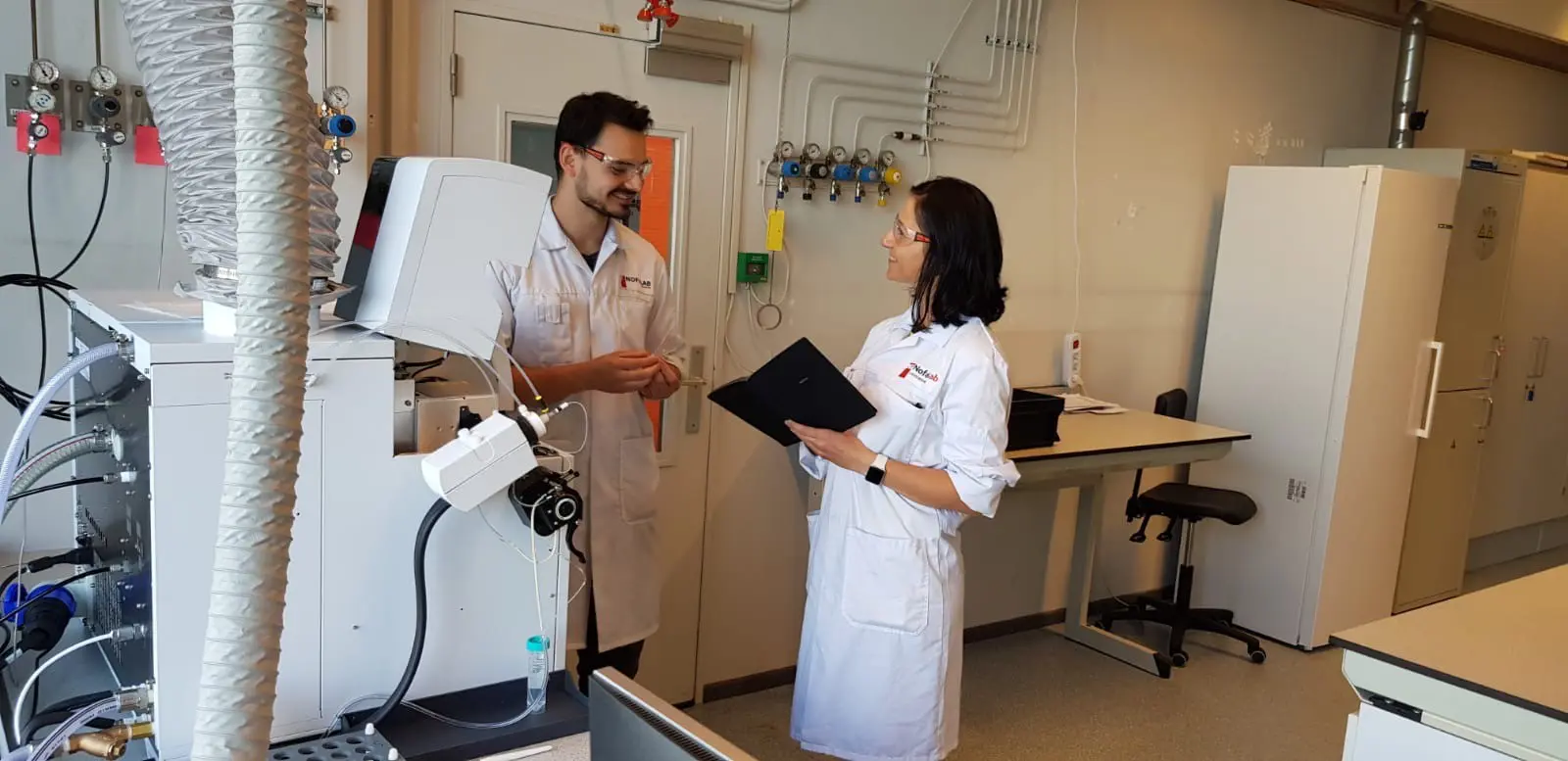
Get insights into effective strategies for mitigating risks from Persistent Organic Pollutants (POPs) like PFAS and dioxins.
Persistent organic pollutants (POPs) are toxic chemicals that pose significant threats to human health and the environment due to their long-lasting nature. These compounds resist degradation, allowing them to persist for extended periods, often spanning decades. POPs can accumulate in the fatty tissues of living organisms, magnifying their concentration as they move up the food chain, a process known as bioaccumulation. This makes them hazardous to both wildlife and humans, even at low concentrations.
Two prominent examples of POPs are dioxins and perfluoroalkyl substances (PFAS). Dioxins, which include polychlorinated dibenzo-p-dioxins (PCDDs) and polychlorinated dibenzofurans (PCDFs). POPs are byproducts of various industrial processes, such as waste incineration and herbicides manufacturing. These chemicals are highly toxic, with some dioxins listed as the most potent known carcinogens.
Perfluoroalkyl substances, commonly referred to as PFAS, represent a large group of synthetic chemicals widely used in various industrial applications due to their water- and grease-resistant properties. PFAS are found in products like non-stick cookware, waterproof clothing, and firefighting foams. Their extreme persistence in the environment has earned them the nickname "forever chemicals," as they can remain intact for decades, posing long-term risks to ecosystems and human health.
Both dioxins and PFAS exemplify the challenges posed by POPs; their persistence, toxicity, and ability to accumulate in living organisms make them a significant concern for environmental and public health policy worldwide. Efforts to mitigate their impact involve international treaties like the Stockholm Convention, which aims to eliminate or restrict the production and use of these dangerous substances.
Dioxins
Out of the 210 there are 17 highly toxic dioxins, but not in high numbers, that is why every dioxin gets its own toxic equivalence factor (TEF). The higher the TEF value the more dangerous the dioxin is. The toxic equivalent (TEQ) is the sum of the 17 dioxins multiplied by their own individual TEF.
Polychlorinated biphenyls (PCBs) are human made POPs used for industrial applications but end up in our food through environmental pollution. The 12 most toxic PCBs that have their own TEF can be analyzed.
NofaLab, part of the Cotecna Group, was one of the first laboratories in the Netherlands to be accredited to conduct dioxin analysis and has one of with the fastest turnaround times (TAT).
Three years ago, NofaLab developed a method that measures PCBs and dioxins in one run on a GC-TQXS apparatus, shortening the analysis time.
What is GC-TQXS?
The GC-TQXS is a triple quad MS with a photomultiplier detector. The ionisation occurs under atmospheric pressure. Inside the MS there are two quadrupoles. The first quadrupole is where a distinction is made between the masses selected and the masses removed. Next, the selected masses pass the collision cell. Here the so-called mother ions, in contact with the argon, will be fragmented into daughter ions. The daughter ions then pass onto the next quadrupole. Again, there is a selection being made between the ions that will be discharged and the ions that reach the detectors. The fact that there are two selections being made makes the system extremely efficient.
The time of the analysis is reduced significantly because the PCS fraction and the dioxin fraction, obtained by the Miura, are put together. So, in one run the dioxins and PCBs are both measured. This contrasts with the DFS where the fractions are being measured separately. However, to adhere to international standards, we still analyse for PCB’s and dioxins on the GC-HRMS.
The high-resolution MS is extremely sensitive and has a double focusing system. By using electronic ionisation, which gives us a lot of information, and the magnetic sector we can determine the mass by four significant digits.
We work with one GC for the dioxins analysis and one for the PCBs analysis. By using the dual data system, we can work faster. Once the PCB is done, we can insert it into the MS and GC system and the dioxins will be injected into the GC.
In recent years, we gained a lot of experience with all kinds of matrix, and we are now able to analyse dioxins and PCB’s in almost every food and feed matrix.
PFAS
At NofaLab, we have an analysis method for 24 PFAS including the four regulated ones; PFOS, PFOA, PFNA and PFHxS. We have started the accreditation process and hope to soon have the method in our scope. Meanwhile we keep developing the method by optimizing wherever possible and adding more PFAS components to it.
In the Netherlands, PFAS are found in free-range farm eggs which threatens public health safety. Surprisingly, PFAS are present in all free-range farm eggs everywhere. Moreover, not only areas with PFAS producing components are polluted, PFAS are found everywhere in the country in alarmingly high concentrations. This is proof that PFAS migrate in unforeseen ways.
Analysing the levels of dioxins and perfluoroalkyl substances (PFAS) in food and animal feed is crucial for safeguarding public health. These persistent organic pollutants are highly toxic, even at low concentrations. Over time, PFAS can accumulate in the body, leading to severe health issues such as cancer, immune system impairment, and developmental problems. Given their widespread presence and long-lasting nature, ensuring that food and feed are free from harmful levels of these contaminants is important to prevent chronic exposure.
Regular monitoring and rigorous analysis help identify sources of contamination and enable regulatory agencies to enforce safety standards. Hence, reducing the risk of long-term health impact on populations. Furthermore, understanding the levels of dioxins and PFAS in the food supply is vital for making informed decisions about agricultural practices, industrial processes, and consumer safety. By prioritizing the analysis of these substances, we can better protect public health, ensure the safety of our food systems, and work towards minimizing the presence of these dangerous pollutants in the environment.
By continuing to improve and expand our analysis methods, we follow the Cotecna way:
For more information on POPs testing or to request for a free quotation, please contact us.
About NofaLab
NofaLab provides reliable laboratory testing and analytical services, specializing in food, feed, and industrial applications. With ISO 17025 accreditation (L440), NofaLab delivers accurate, science-based results that support sustainability, regulatory compliance, and operational efficiency. Through expert knowledge and advanced technology, NofaLab helps clients optimize processes, enhance productivity, and meet international quality and safety standards.